Resources
Verification records
Records of Kitewell actually running against systems built for the demo. Dates and figures are published as recorded.
Use case runs
Each use case has one recorded run in a demo environment.
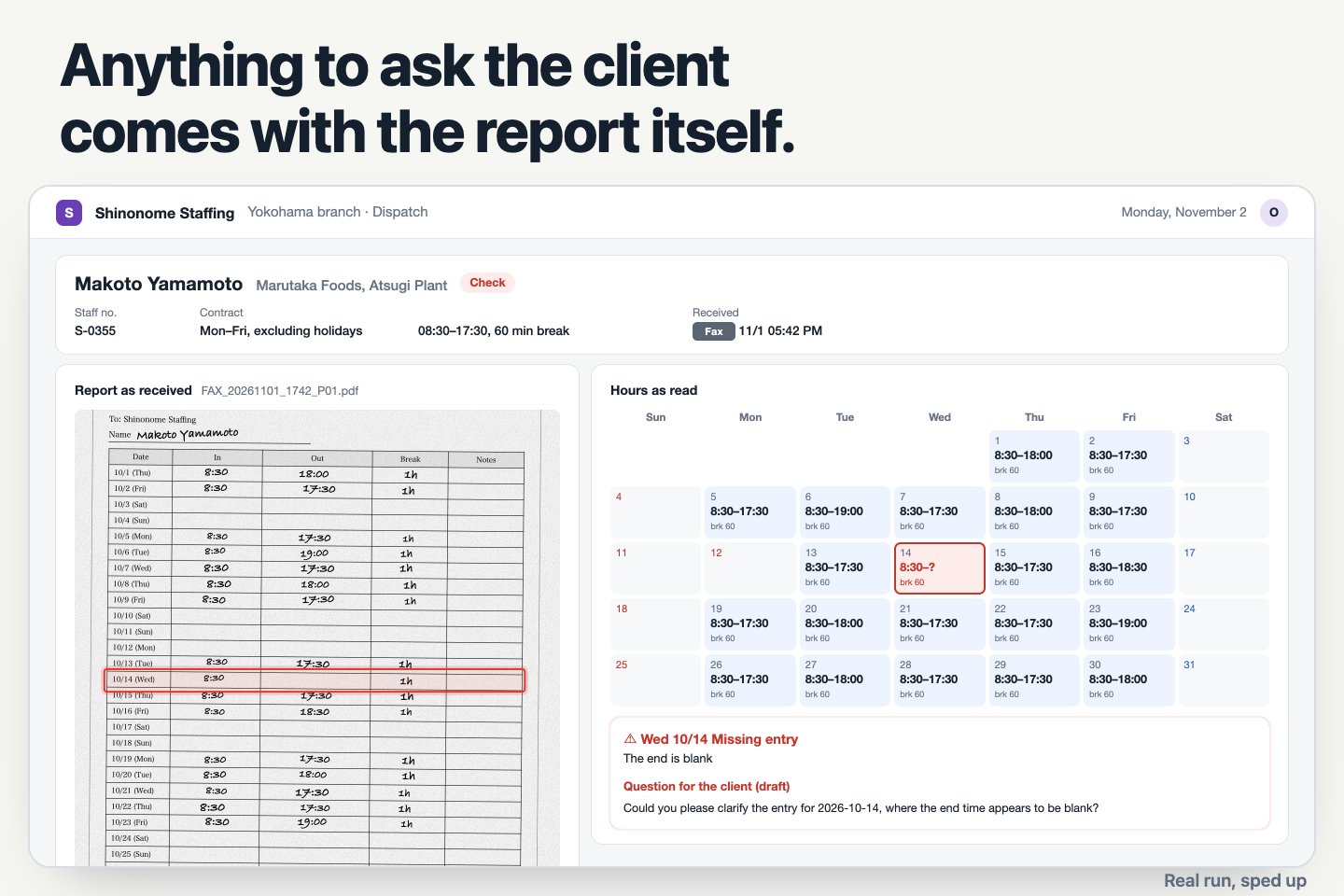
- Import hours reported by clientsHours for 12 workers (253 working days) from 5 clients, sent as Excel files, PDFs, a fax, CSVs, and time-card photos, read in 127 seconds and checked against each contract. The 3 days that need the client (Saturday work outside the contract, a break too short, an end time left blank) shown with the report's own words. After the coordinator approved, 9 workers' hours went into payroll and billing and the 3 questions went to the clients. Kitewell built the workflow 17 minutes after the request.
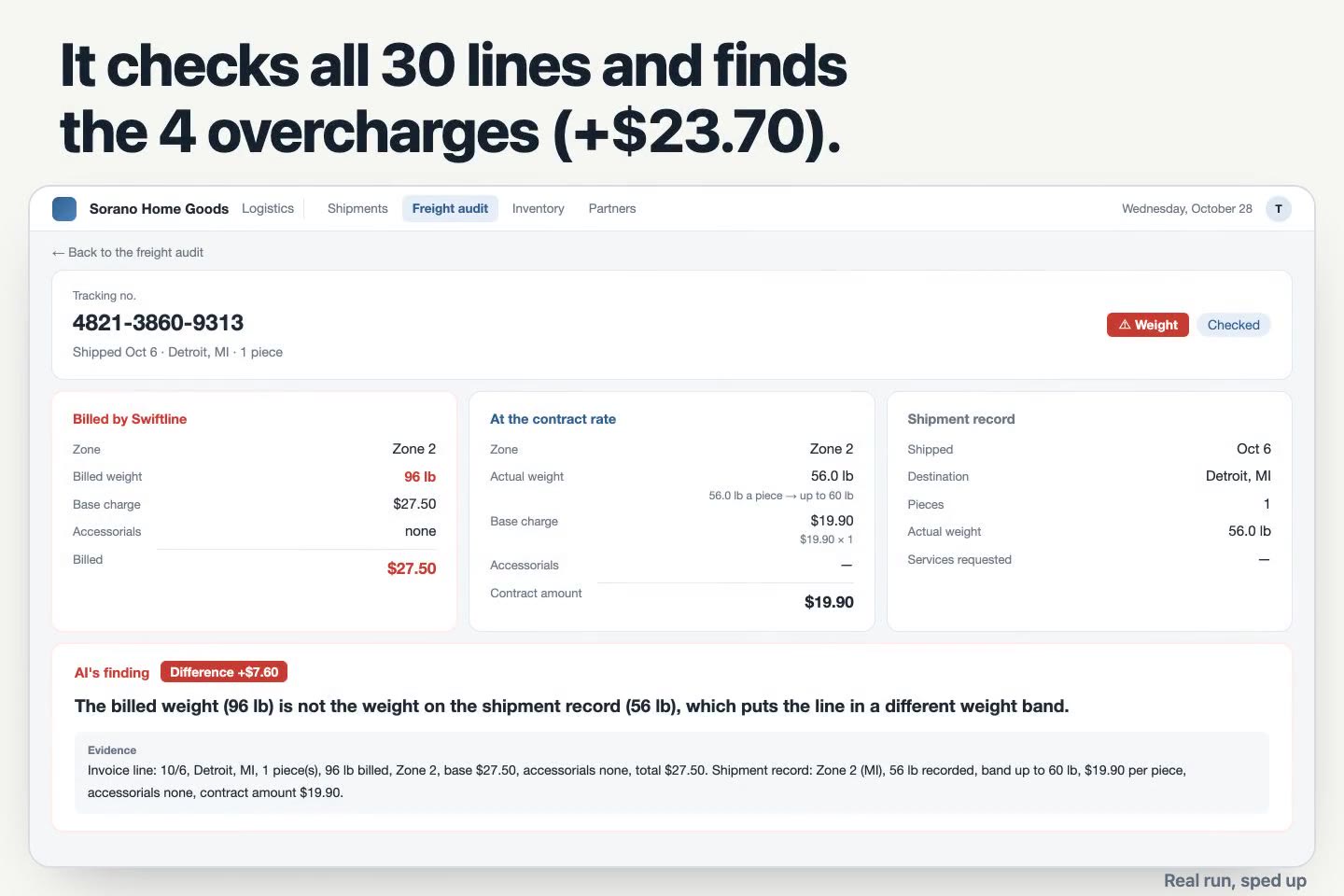
- Reconcile freight invoices30 October invoice lines taken from the carrier's portal and checked against shipment records and contract rates in 30 seconds; the 4 overcharges (+$23.70), on weight, zone, rate, and an accessorial, came with their reasons and evidence. Accounting approved, 26 lines were approved for payment, and the 4 went back to the carrier. Kitewell built the workflow 5 minutes after the request.
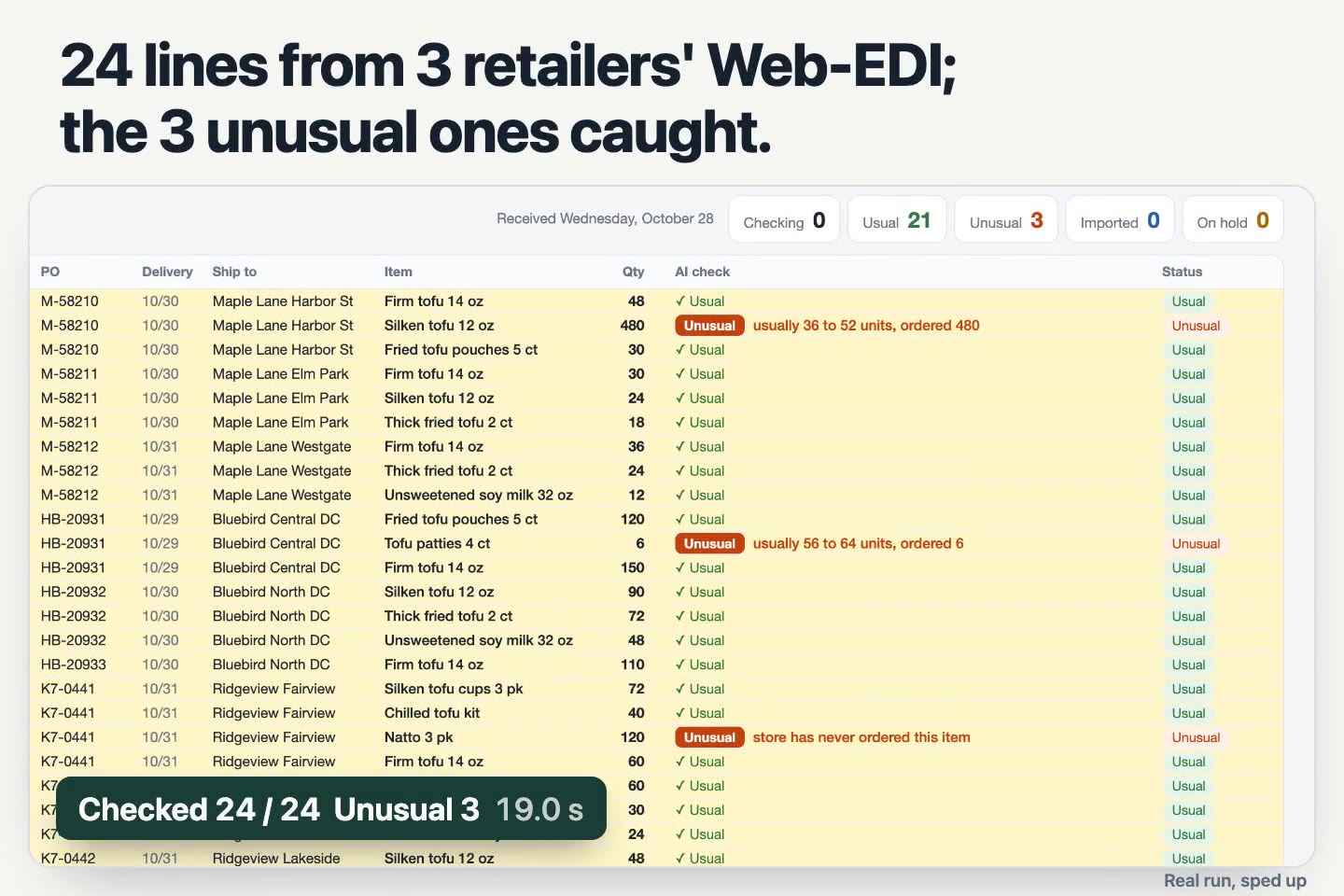
- Take in orders from retailers' Web-EDIKitewell's browser signed in to 3 retailers' Web-EDI, collected 24 order lines, and checked them against past orders in 19 seconds. AI flagged the 3 unusual lines, ten times the usual quantity, a tenth of it, and an item the store had never ordered, with its reasons. A person approved; 21 lines were imported and 3 held to confirm with the retailer. Kitewell built the workflow 8 minutes after the request.
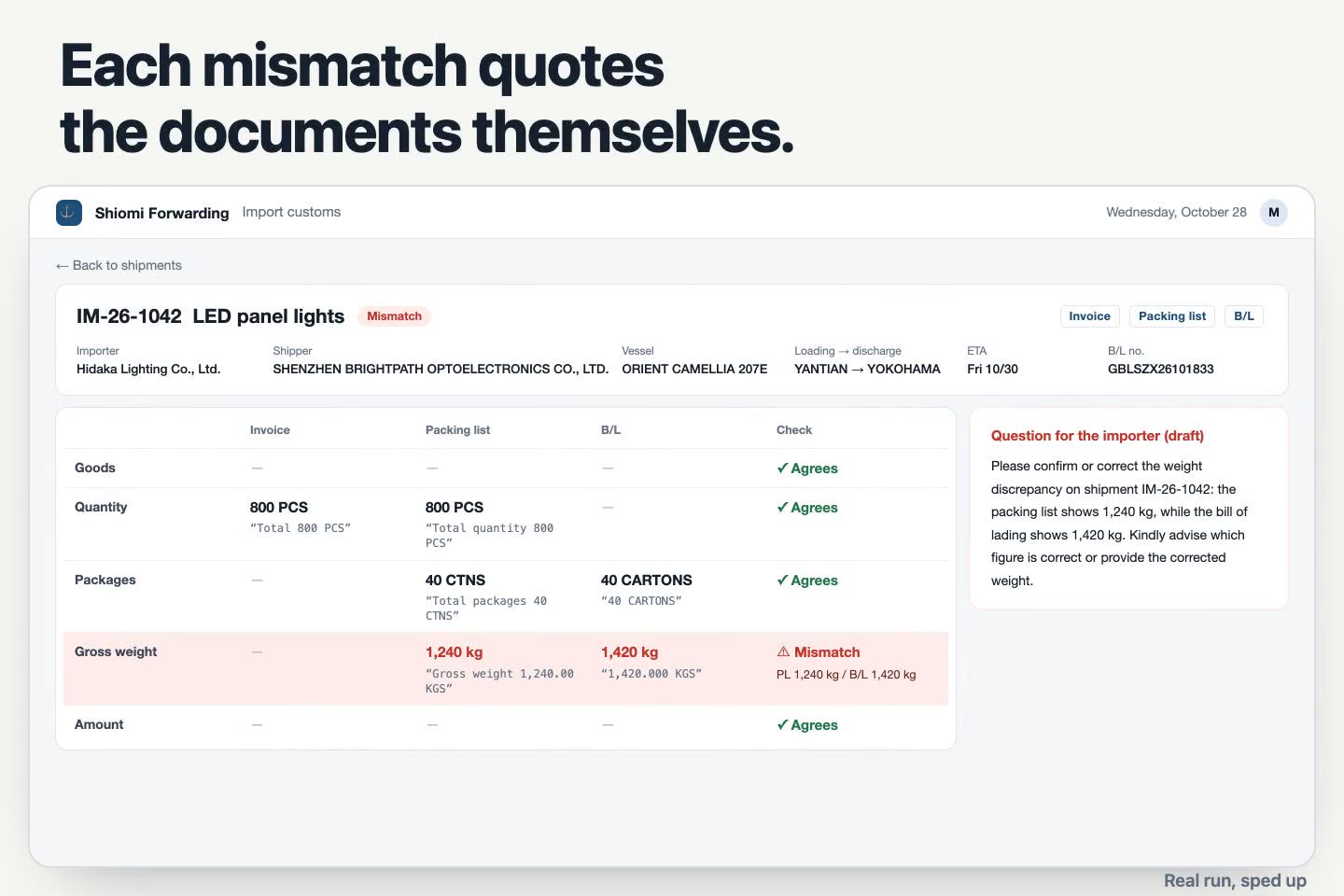
- Read and cross-check import documents before filing36 documents for 12 import shipments (invoices, packing lists, and B/Ls) cross-checked in 54 seconds, and the 3 shipments that disagree on gross weight, quantity, or packages shown with the documents' own words. After the specialist approved, the 3 queries went to the importers and the 9 matching shipments were marked ready to file. Kitewell built the workflow 19 minutes after the request.
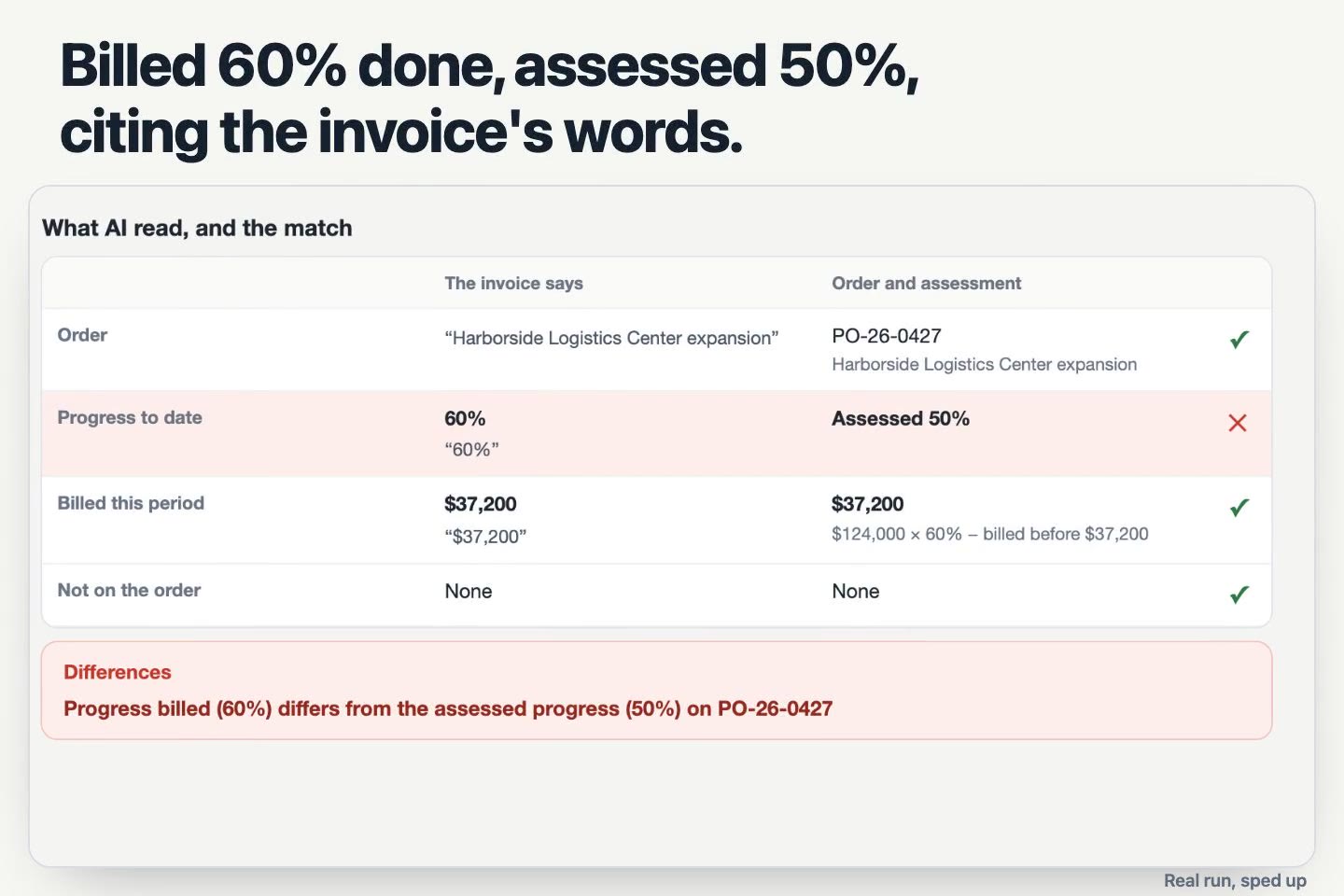
- Match subcontractor progress billing to orders20 progress invoices from 16 subcontractors, each in its own format, read and matched against the orders and assessed progress in 33 seconds; the 5 that differ (progress over the assessment, an amount off, a line not on the order) were shown with the invoice's own words, and the 15 that match went into the payment data once a person approved. Kitewell built the workflow 10 minutes after the request.
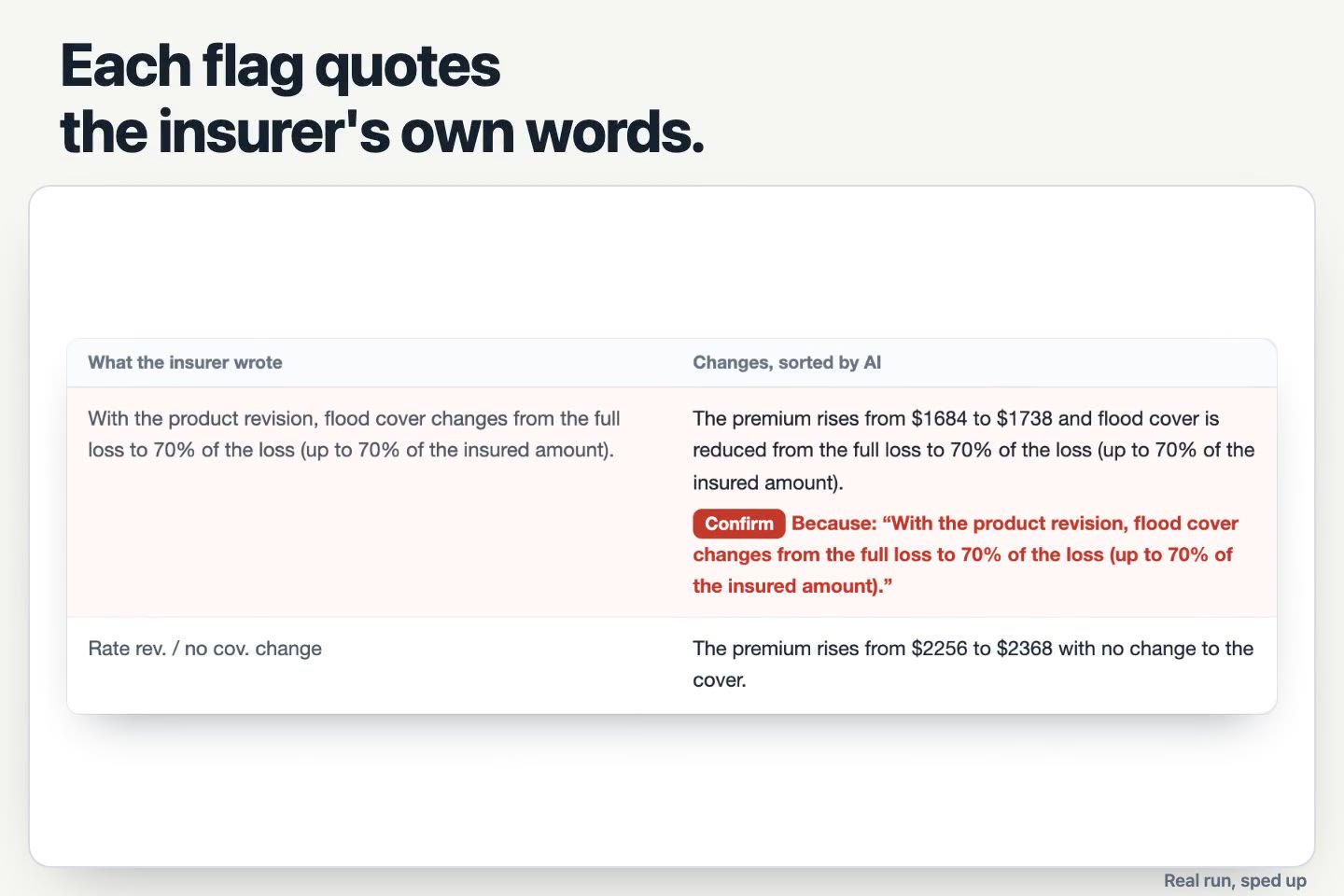
- Find expiring policies and send renewal notices24 policies expiring in December collected from 3 insurers' agency systems through their screens and turned into 16 customers' change summaries and draft renewal notices in 37 seconds; the 5 customers whose cover shrinks were flagged to confirm intent, each quoting the insurer's own words. A person approved, and the 16 notices were sent. Kitewell built the workflow 6 minutes after the request.
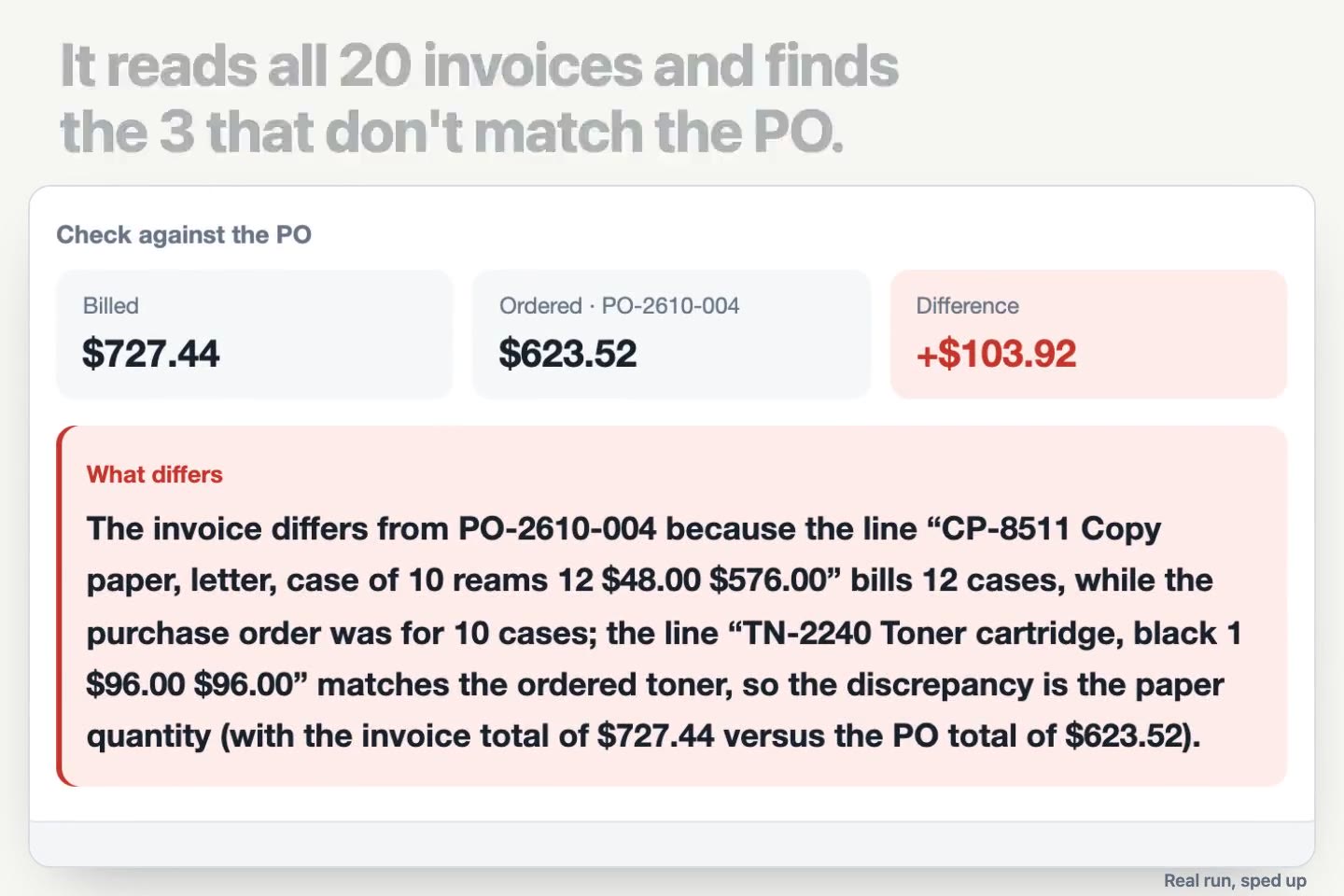
- Read invoices into the accounting system20 supplier invoices read in 72 seconds and checked against their purchase orders; the 3 that differ, on quantity, unit price, and a freight charge, came with the invoice's own words. Accounting approved, and all 20 were entered through the accounting app's screens in 4 minutes. Kitewell built the workflow 23 minutes after the request.
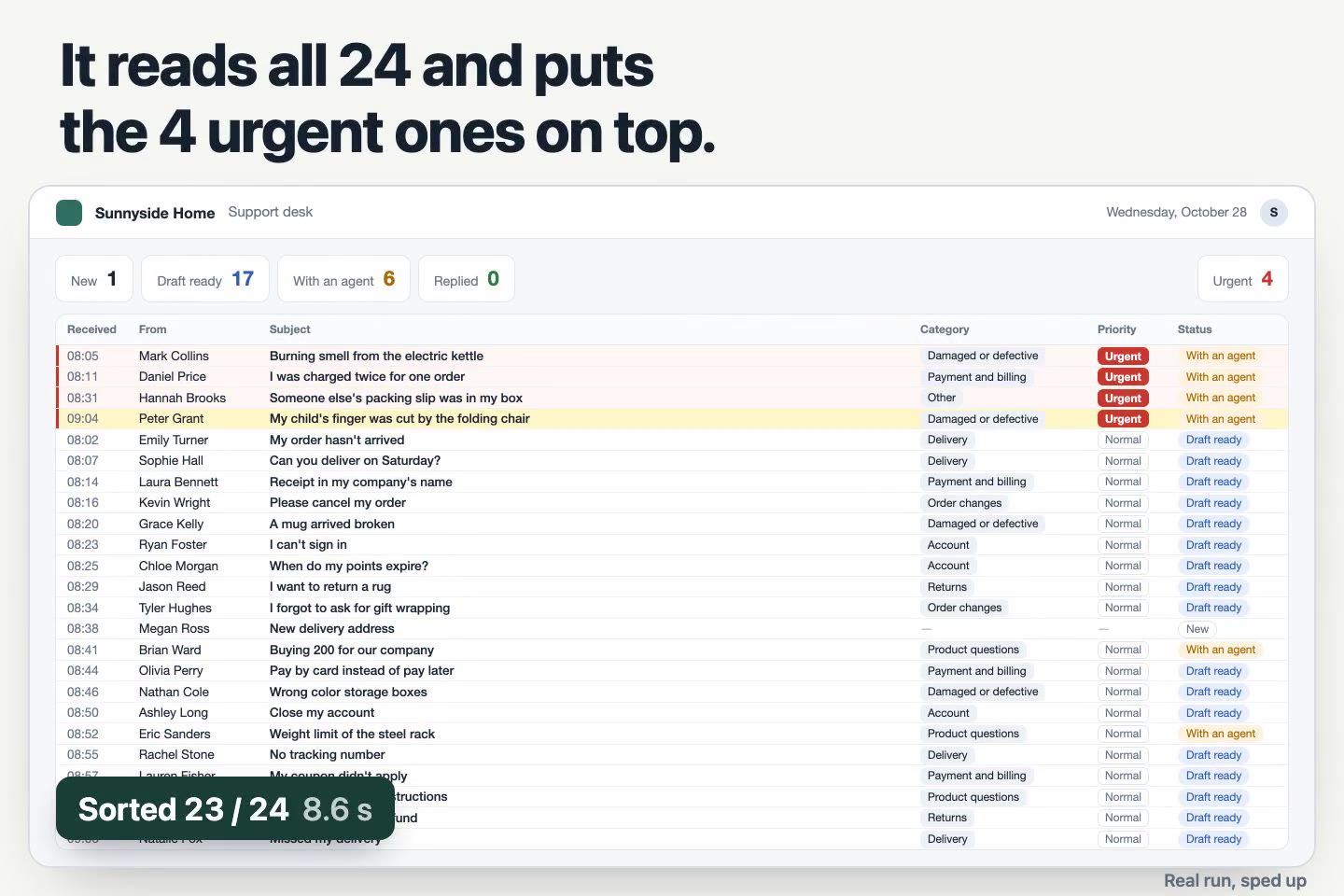
- Classify inquiries and draft replies24 new inquiries sorted in 9 seconds and 18 replies drafted from past ones; a person approved them and they were sent, and the 4 urgent inquiries and 2 with no past reply went to a person. Kitewell built the workflow 3 minutes after the request.
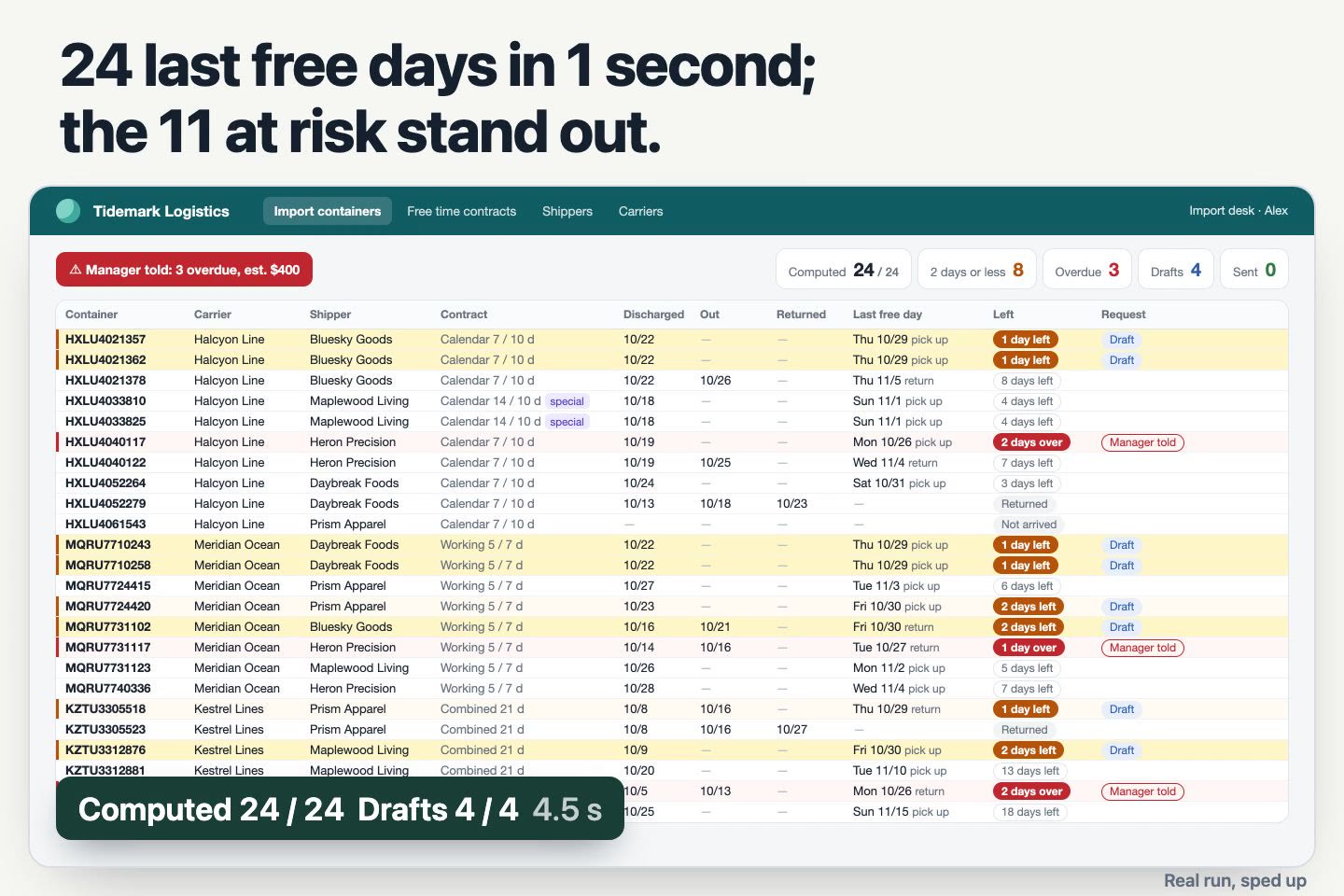
- Manage free time, demurrage, and detention24 containers' last free days worked out from three carriers' tracking in 1 second, and requests drafted for the 4 shippers with containers two days or less from the deadline. A person approved and they were sent, and the 3 overdue containers went to a manager with their estimated charges. Kitewell built the workflow 19 minutes after the request.
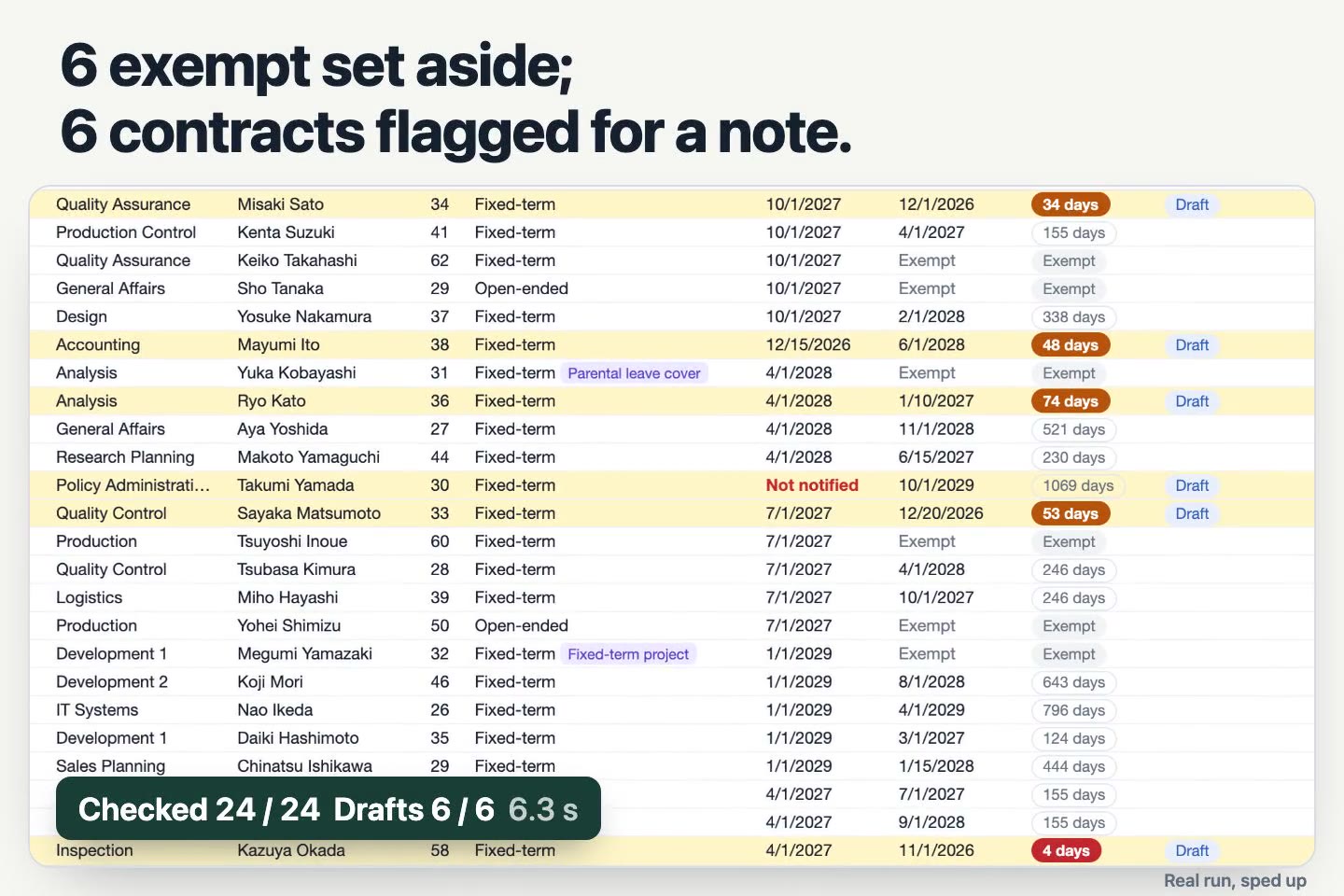
- Check and track dispatch period limits24 active contracts checked in 6 seconds: 6 exempt ones set aside, and for the 6 within three months of a limit or at a site with no notified limit date, a confirmation to the client and a notice to the worker drafted. A person approved and they were sent. Kitewell built the workflow 5 minutes after the request.
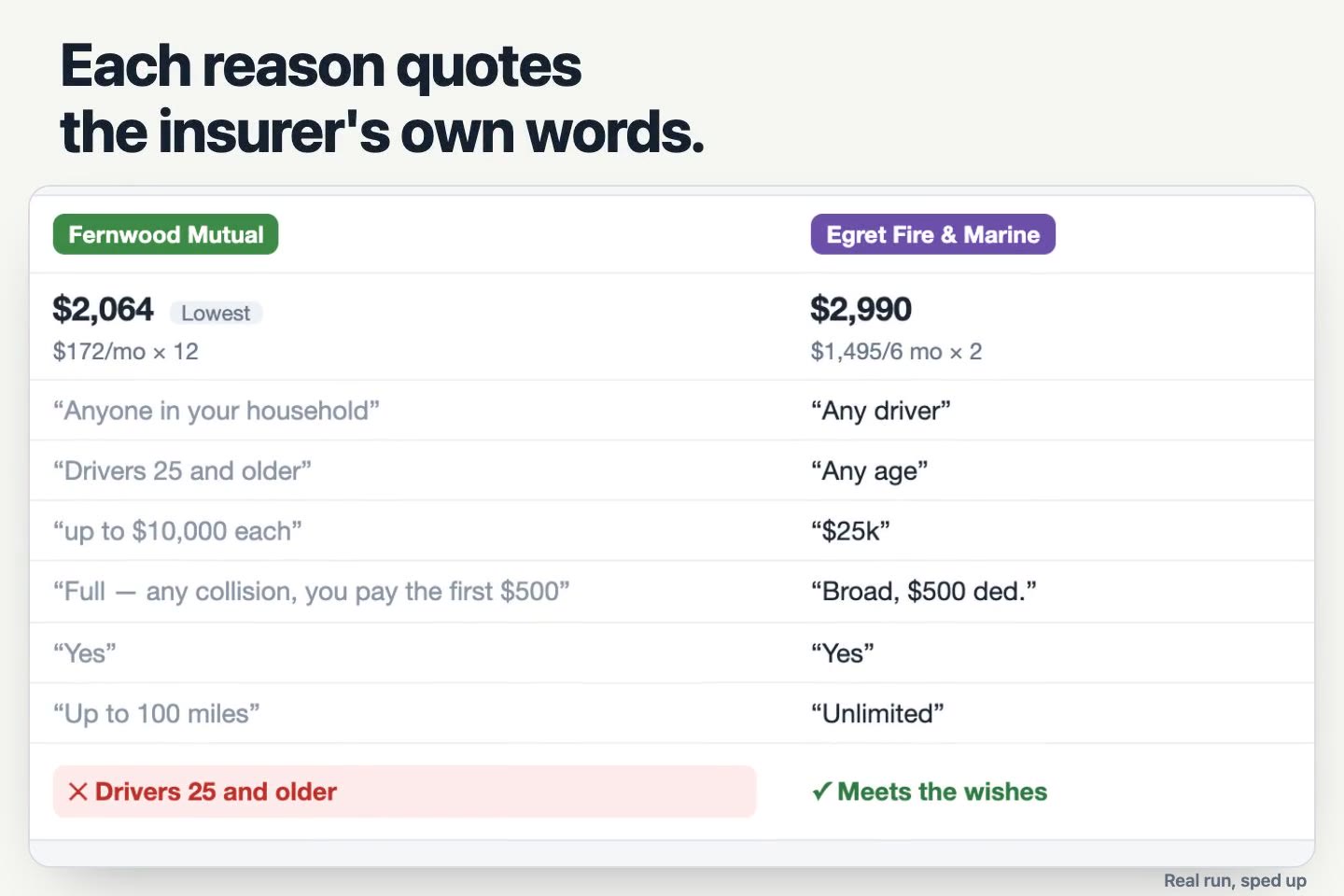
- Draft comparison explanations and records24 quotes from 3 insurers for 8 clients read and compared in 80 seconds, with a comparison table and a reason drafted for each; for 6 of the 8, the lowest-priced quote missed the client's wishes, so one that met them was recommended. A person approved and the records were saved. Kitewell built the workflow 10 minutes after the request.
What each record reports
A PoC report uses the same items.
- The work
- The work verified, and the systems connected
- Items processed
- How many items one run handled
- Processing time
- How long one run took
- Correct completion
- The share of items that met the done condition
- Stops and their reasons
- Steps AI relearned, and stops a person handled
- AI cost
- The models used, and what they cost
Run records in our articles
Scheduled runs and collecting from partners' screens, explained with their run records.
Records of runs against systems built for the demo. They are not customer cases.
- Orders from three customers' Web-EDIOrder CSVs collected from three customers' Web-EDI sites and merged into one list. AI learned the steps on the first run, and the second run repeated them.Read the record
- A run at a set timeA workflow that collects orders from two customers' sites, started by its schedule. The record runs from the start to the finish, with nobody operating it.Read the record
Get the same record on your own systems
A one-month PoC runs on the same screens and data as production, and reports on the same items.